
Stephen Baker
April 30, 2026
Want to watch the video instead? Click below!
You do better work than the big guys. Your customers know it. Your reviews show it. So why are they still outranking you on Google and taking every lead in your area?
It's not because they have more reviews. It's not because they've been around longer. It's because they're running a specific SEO strategy that most small HVAC businesses simply aren't. We pulled three of the biggest HVAC companies in North America into Semrush and broke down exactly what they're doing — so you can take what works and use it yourself.
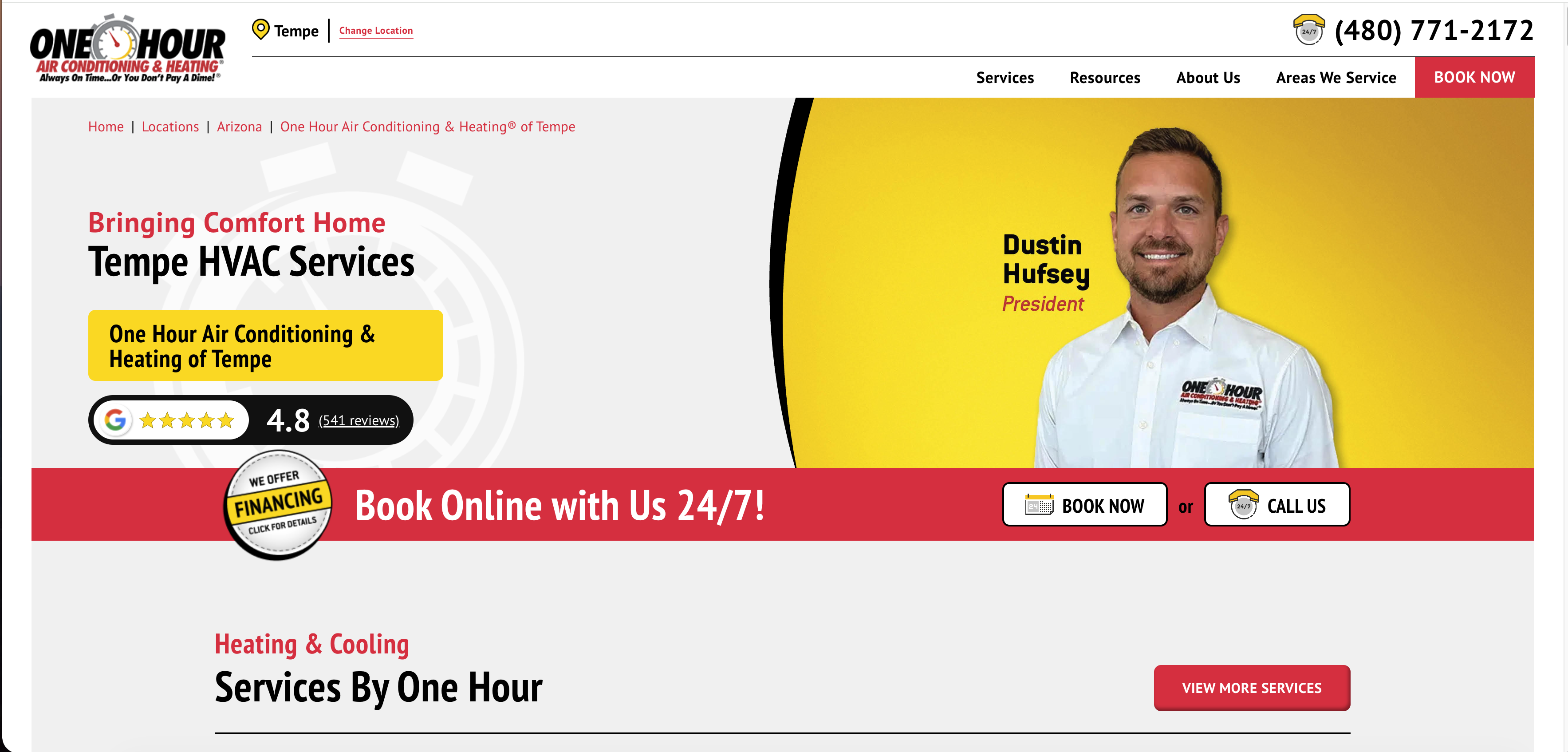
1-Hour Heating and Air Conditioning operates in dozens of cities across the US, pulling in over 150,000 organic visitors to their website every single month. When you dig into the keywords driving that traffic, the strategy becomes obvious fast.
They have thousands of individual pages on their website — each one built around a specific service and location. Rather than one generic "HVAC Services" page trying to rank for everything, they've created dedicated URLs for every combination: emergency HVAC services, water heater repair, AC repair in specific cities, and so on. When you look at their top-ranking keywords, almost every single one points to a different page on their website. That's not an accident.
Here's the lesson for your business: Google wants to send searchers to the most relevant page it can find. If someone searches "AC repair in [your city]," a page titled exactly that — with content entirely focused on that service in that location — will almost always beat a generic homepage. One page, one keyword, one service, one location. That's the formula.
Where 1-Hour gets it wrong for smaller operators is in chasing high-volume, broad keywords like "AC repair near me" or "heater repair near me." These terms get tens of thousands of monthly searches, but the competition is brutal and they have zero local intent. For a business serving one city or region, these are a waste of effort. The real opportunity is in the localized, specific searches — "heat pump installation in North Vancouver" or "furnace repair in Burnaby" — where competition is lower and the person searching is far more likely to become a customer.
Your takeaway: Start building individual landing pages for every service you offer and every city you serve. One page per combination. Keep the content on each page specific to that service and that location — don't just swap the city name and call it done.
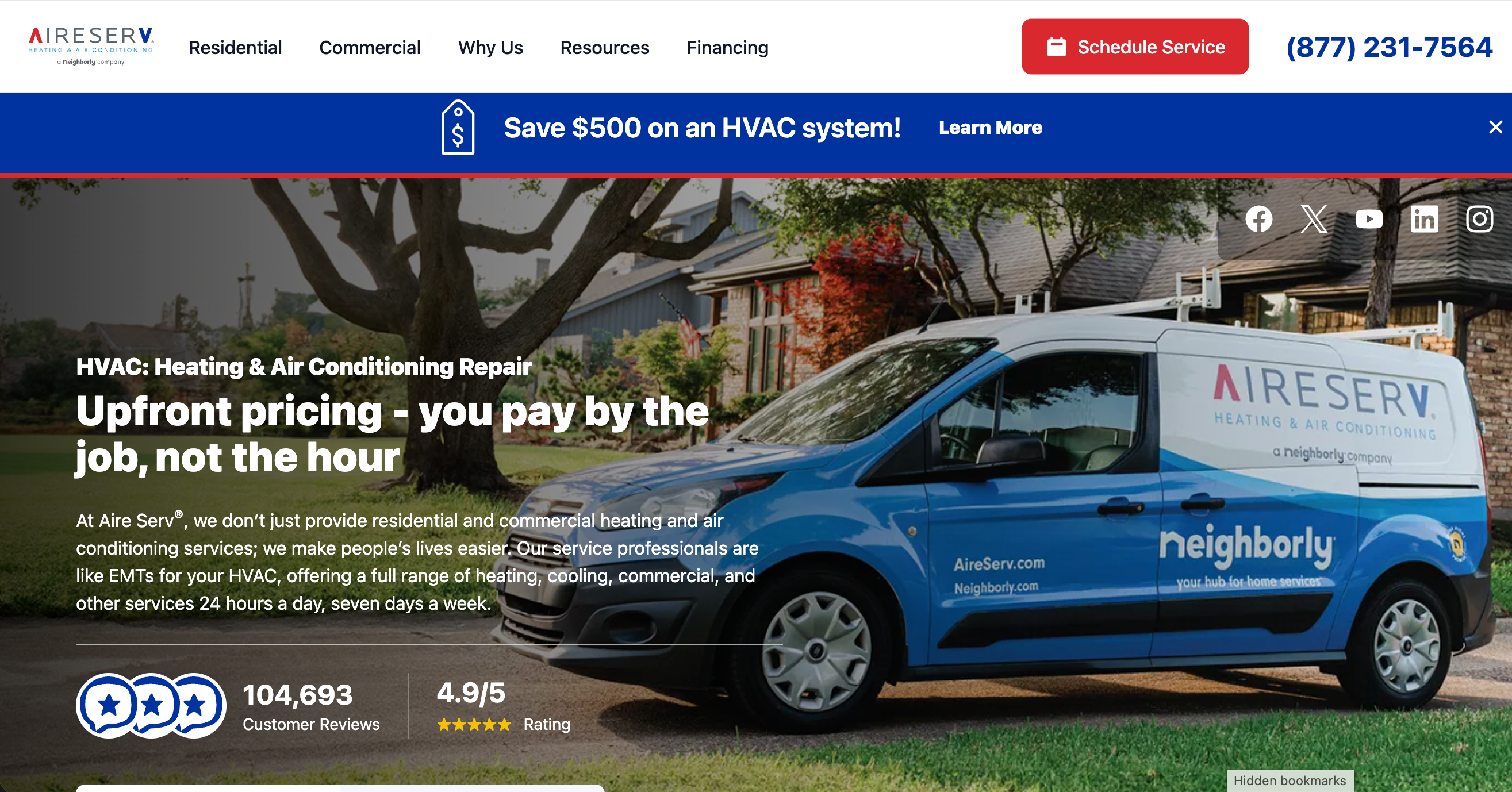
AirServe has a stat that stands out from the rest: thousands of mentions across AI platforms like ChatGPT and Gemini. This isn't luck — it's the direct result of a very deliberate content strategy.
When you look at what's getting them featured in AI overviews, it's almost entirely informational content. Blog posts like "How to Quickly Cool Your House if Your AC Breaks" or "What Is a Hybrid Water Heater?" — highly specific answers to real questions real customers are asking. Each blog post targets one topic and one topic only. No filler, no generic "top 10 reasons to fix your HVAC" content that nobody is actually searching for.
This approach does two things. First, it gets them surfaced in AI-generated answers, which is becoming an increasingly important channel as more people use ChatGPT or Gemini to answer home service questions before they ever search Google. Second — and this is huge — it earns them organic backlinks. When a blog post ranks number one for an informational search, other websites naturally cite it in their own articles. Those backlinks increase domain authority over time, which in turn makes it easier for their service and location pages to rank for the competitive, lead-generating keywords.
Most HVAC businesses either skip blogging entirely or outsource it to someone generating generic AI content that Google can see right through. The companies winning at this are treating each blog post like an answer to a specific customer question — the kind of questions you hear on service calls, on the phone during quotes, or in your inbox every week.
Your takeaway: Start a list of every question your customers ask you in the field. Those are your blog topics. Write one post per question, keep it focused and specific, and publish at least once a week if you can. This is how you build authority and start showing up where your customers are looking — including on AI platforms.
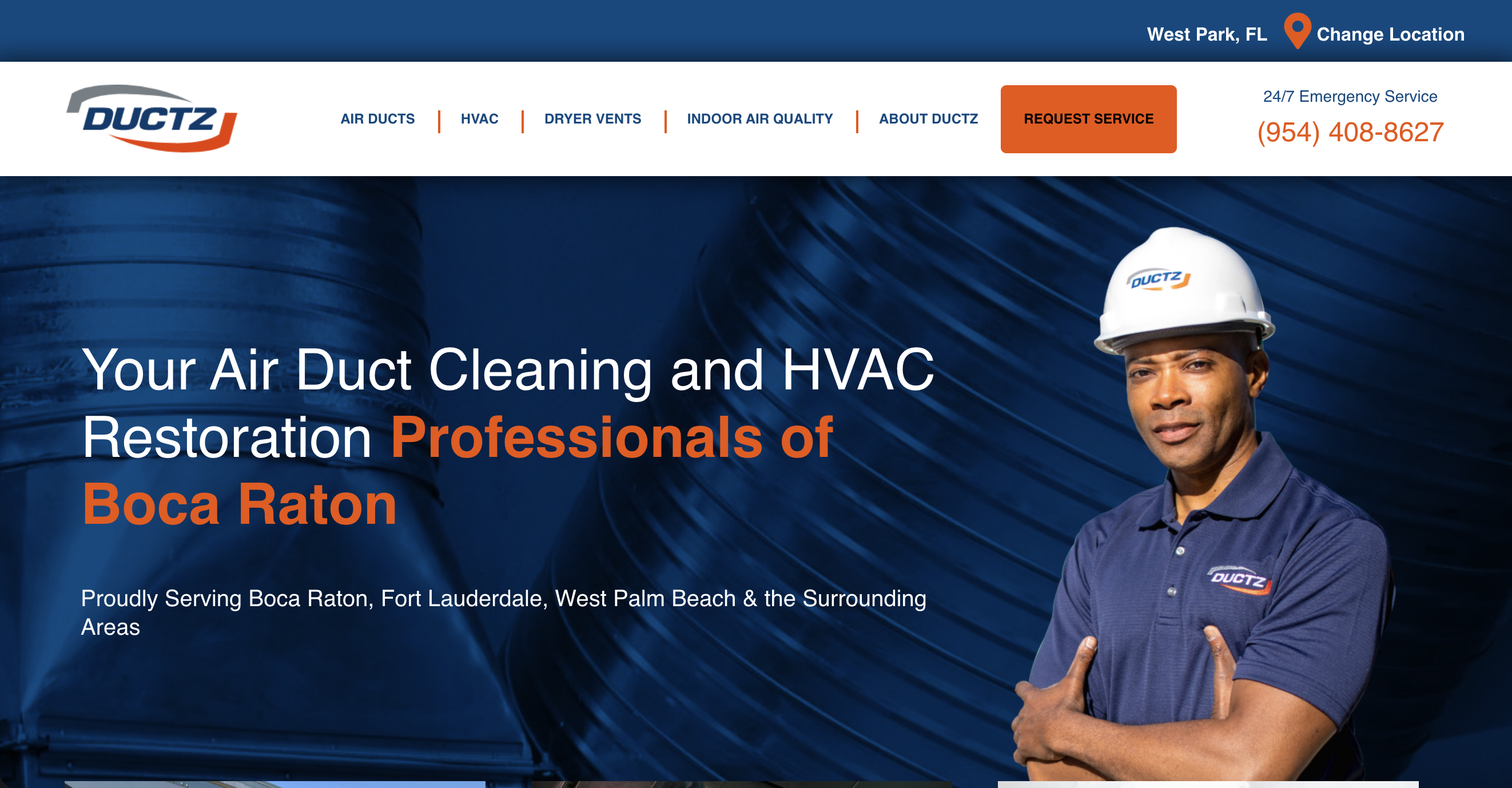
Duct's takes a different approach from the first two, and it's one of the most actionable strategies in this entire breakdown. Rather than leading with website SEO, they've built a network of Google Business Profiles that rank in the local pack — the map results that appear at the top of Google searches — for hundreds of keywords across multiple cities.
The interesting thing is they don't have an overwhelming number of reviews compared to some competitors. What they do have is consistency. Their profiles get updated regularly with posts, photos, and fresh reviews coming in on an ongoing basis. Google's algorithm interprets this as a signal that the business is active, legitimate, and trusted by real customers — and it rewards that with higher rankings.
What's especially smart is how they've scaled this. They maintain dozens of business profiles across different cities and push the exact same content updates to every profile simultaneously. It doesn't need to be unique content for each location — Google just needs to see that each profile is active. One person managing the content can cover an entire service network with this approach.
They also keep their service areas tightly defined on each profile. Trying to cover a massive geography with a single profile dilutes your ability to rank. Smaller, well-defined service areas on each profile make it easier to dominate those specific locations in the local pack.
Your takeaway: If you serve multiple cities, set up a separate Google Business Profile for each one. Keep each profile active with regular posts and photos, and make sure reviews are coming in consistently — at least weekly. You don't need hundreds of reviews to rank; you need recent, regular ones. Use the same content across profiles to keep it manageable.
Three different companies, three different areas of focus — but the underlying principle is the same. Google rewards specificity. Specific pages for specific services in specific locations. Specific blog posts answering specific questions. Specific business profiles for specific cities.
The big franchises are actually easier to beat at the local level than they look. They're trying to rank everywhere for everything, which means their content is often broad and generic. A small business that goes deep on one city and does it right will consistently outperform a national brand that's spread thin across the whole country.
Pick one of these three strategies, start implementing it this week, and build from there.

Home Service SEO and Website Design
.svg)
.svg)


