.jpg)
I'm about to show you our three-step process, the "Lure, Launch, Lock-in" method that got us 90 HVAC leads over the past month
So far, I have not seen any other HVAC company use this strategy to get leads
I'm going to walk you through the full strategy (with examples)
And stick around to the end because I'm going to show you how much all of this costed and where we got the leads from
The method we used is our "Lure, Launch, and Lock-in" strategy
It might look different from client to client
But in some cases like this, a new tool comes out that results in a paradigm shift in lead generation
First off, here's a screenshot of proof (March 1-31) showing email responses from our leads:

Here's how it works:
Step 1: Lure 🪤
Understanding Your Customer’s Biggest Question
Before anything else, you need to understand what your customers want most—the price.
Homeowners looking for HVAC services are primarily searching for cost estimates.
If you can answer that question upfront, you create an opportunity to capture leads before they even reach out to your competitors.
This is where a free lead magnet comes in.
A lead magnet is a digital tool that provides free value in exchange for contact information.
Think of it like a retail store allowing customers to try on clothes before purchasing.
The try-on experience increases the likelihood of a sale.
Your lead magnet does the same—it gives potential customers something of value before asking for their business.
How it Works
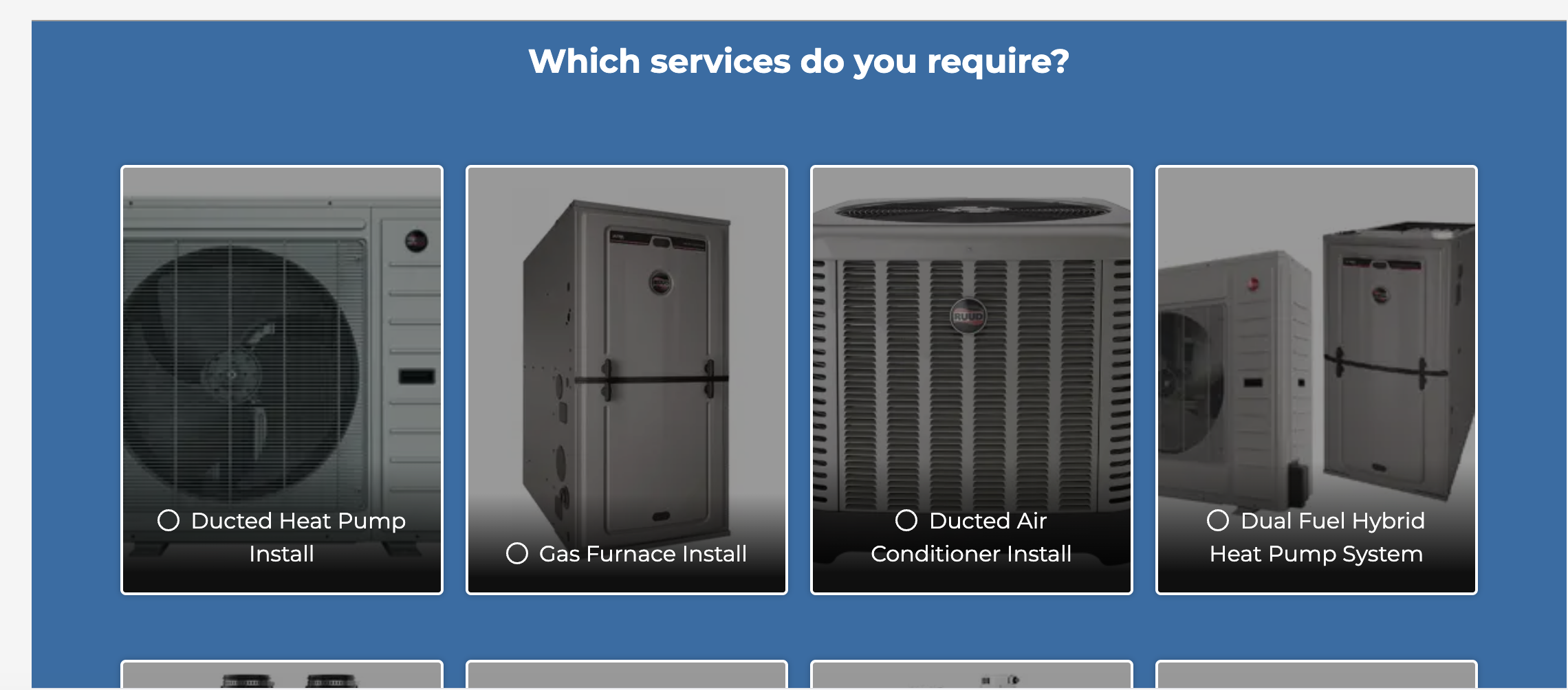
For this campaign, we used PriceGuide.ai, a free online price calculator.
Here’s how it works:
- The customer fills out a form with details about their HVAC needs.
- They receive an estimated price immediately on the website.
- Before seeing the price, they submit their name, phone number, email, and zip code.
At this point, they get the information they were looking for, and you capture their contact details, turning them into a lead.
This is a screenshot of what it looks like on an HVAC website:
Why This Works
- Customers are hesitant to commit to a phone call but will gladly use an online tool.
- It’s a low-commitment action for them but a high-value opportunity for you.
- It positions you as the company providing transparency, which builds trust.
Where People Go Wrong
- Overcomplicating the lead magnet – It needs to be simple.
If the form is too long, people won’t complete it.
- Not promoting it properly – A tool like this is only useful if it’s visible (more on that in step 2).
- Not capturing the right data – If you’re missing key details like phone numbers, following up will be harder.
Now that you have leads, the next step is getting eyeballs on your lead magnet.
Step 2: Launch 🚀🚀
A lead magnet is useless if nobody knows about it.
You need to drive traffic to your free price estimator, and there are several ways to do this.
Paid Advertising (Meta & Google Ads)
We used Meta ads (Facebook & Instagram) to drive traffic to the price calculator.
Our budget was $30-$50 per day, which generated 3-4 leads per day.
The key was positioning the ad correctly.
Instead of running traditional “Call us for a free quote” ads, we focused on the core value:
“Get a free HVAC estimate in seconds.”
By offering an instant online estimate, the ad became much more click-worthy than a standard service ad.
People don’t want to wait or make phone calls—they want quick answers.
Another paid strategy is Google Ads.
Instead of promoting “HVAC services” directly, the ad headline focuses on the tool itself:
- “Calculate Your HVAC Quote Online in Seconds.”
- “Instant HVAC Estimate—No Calls, No Hassle.”
Organic SEO & Content Marketing
Another major source of exposure is blog content and SEO.
We created blog posts around HVAC pricing and installation costs.
Each post included a call-to-action (CTA) leading to the price calculator.
Every blog post you do (granted they're done right) acts as a lead generator that works while you sleep
If it ranks on Google organically, you're not limited by an ad schedule or your ad budget - it's on Google 24/7
Make sure on each blog, at the top, you have a section where someone can fill in the priceguide form instead of reading the blog like this:
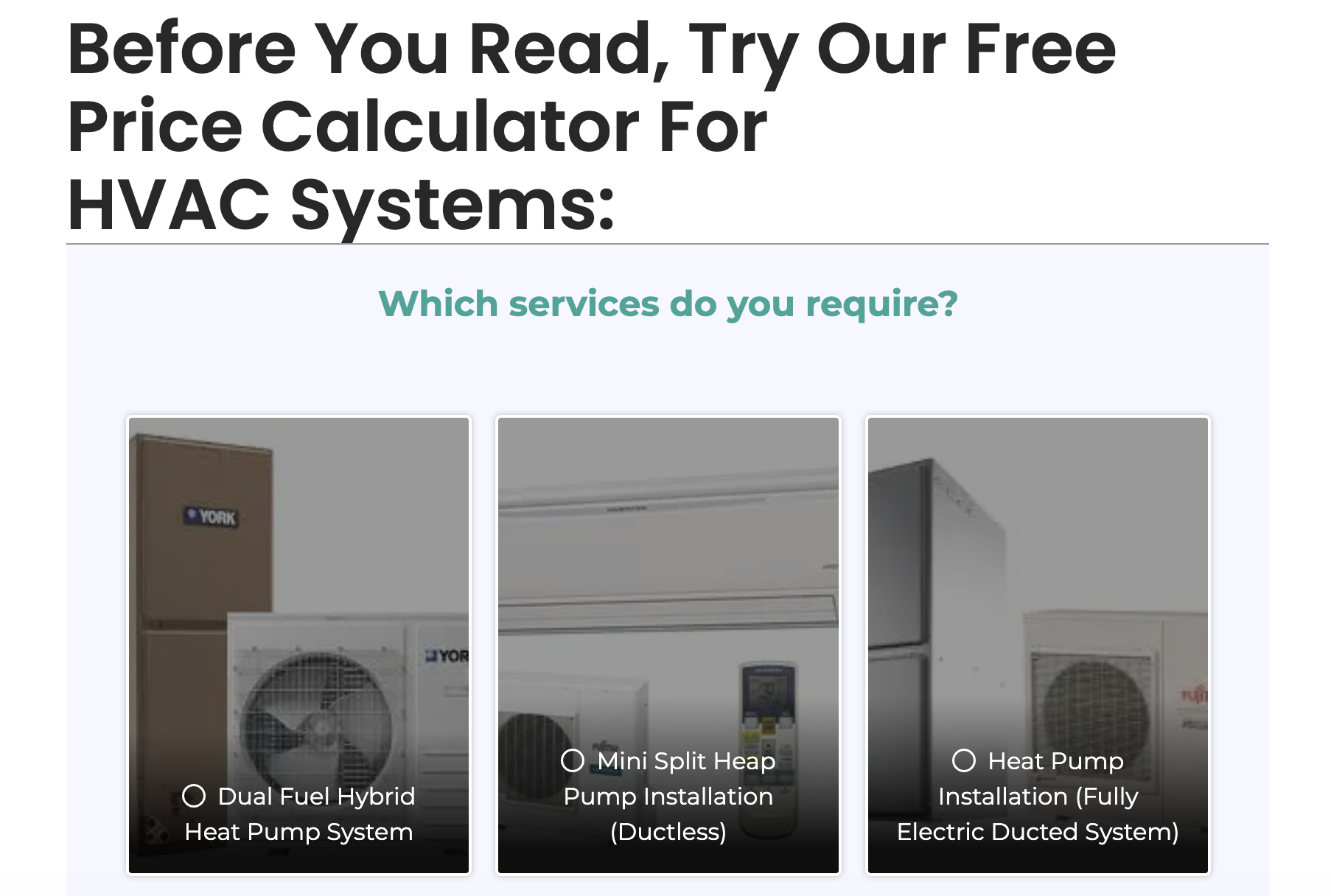
Ideally, you want to create blog posts on how much each of your services cost so that the tool is relevant to the context of the web page
Just to give you an idea of results, even without ads (just SEO), we still got 73 leads over a few months through blogs

Why This Works
- People are actively searching for cost information – When they Google “How much does HVAC installation cost?”, your blog (with the calculator) can show up.
- The calculator adds real value – Unlike generic service pages, this is an interactive experience.
- You can capture leads before competitors even talk to them.
Where People Go Wrong
- No consistent content strategy – Posting once won’t cut it; SEO needs regular updates.
- Not tracking performance – You need to analyze which pages drive conversions and adjust accordingly.
- Not using retargeting – Many visitors won’t convert on the first visit; use retargeting ads to bring them back.
With exposure covered, the next step is converting leads into paying customers.
Step 3: Lock-in 🔒
Immediate Follow-Up (First 30-60 Seconds)
Once someone submits their information, call them within 30-60 seconds.
Why?
Because they just engaged with your tool and are actively thinking about your service.
Waiting too long means they’ll lose interest or move on to competitors.
Your first goal: Qualify them.
This is a quick 10-15 minute conversation where you:
- Confirm they’re actively looking for a new HVAC system.
- Ask about their home, current system, and heating/cooling needs.
- Provide context for their price estimate—explain how factors impact cost.
- Move them to the next step: scheduling a site visit.
The Funnel: Turning Leads into Sales
Think of your lead flow as a funnel:
- Top of the Funnel: Free price calculator captures leads.
- Middle of the Funnel: Immediate follow-up call to qualify them.
- Bottom of the Funnel: Site visit where you close the deal.
Long-Term Follow-Up System
Not every lead will be ready to buy immediately.
That’s why you need an automated follow-up system to keep them engaged:
- CRM Tracking: Organize leads based on interest level.
- Email Sequences: Send reminders, special offers, and educational content.
- SMS Check-ins: Quick text messages can bring them back into the conversation.
- Retargeting Ads: Show follow-up ads to leads who didn’t convert.
Where People Go Wrong
- No immediate follow-up – Waiting even a few hours can drastically reduce conversions.
- Too aggressive too soon – This isn’t a hard sell; it’s about building trust first.
- Not tracking and optimizing – If you’re not monitoring close rates and adjusting, you’re leaving money on the table.
Conclusion: Why This System Works
Most HVAC businesses only go after high-intent leads, which limits their growth.
By implementing this 3-step system—Lead Magnet, Exposure, and Follow-Up—you can tap into a much larger audience and capture potential customers before your competitors do.
This is exactly how we generated 90 leads in just 30 days, and it’s repeatable for any HVAC business willing to execute it.
If you’re ready to scale your lead generation and dominate your market, start implementing this today!
![How to Add Multiple Business Profiles in Google Maps [2026 Guide]](https://cdn.prod.website-files.com/66db9a55dc1c17a7a5711b34/6a4be86b10eefbdf03dd8599_How%20to%20add%20a%20new%20business%20profile%20(1).jpg)
.jpg)